

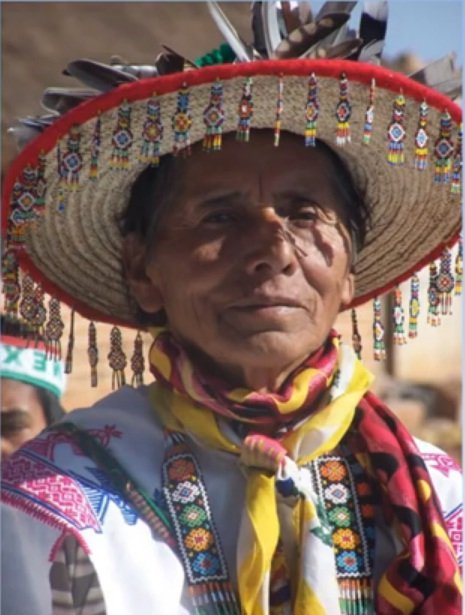
One of the most fascinating Wixaritari concepts is “Niérika”, which, according to their traditions, allows people to communicate with the gods and, at the same time, with their ancestors.
Original text (in Spanish): Wixárika, un pueblo en comunicación
In 2014, Mexico’s Ministry of Public Education (SEP), through its General Coordination of Intercultural and Bilingual Education (CGEIB), reprinted the book “Wixárika, un pueblo en comunicación” (Wixárika, a people in communication), which gives an overview of the main features of this culture living in the Sierra Madre Occidental, mainly in the states of Jalisco, Nayarit, Durango, Zacatecas and San Luis Potosí.
The Wixaritari (plural of Wixárika) are sometimes wrongly called Huicholes. The word Huichol means “the one who flees”, and they do not flee. The term Wixárika means “a person with a deep heart who loves knowledge”. This is the true name of the Wixárika people, as explained in this book written for children.
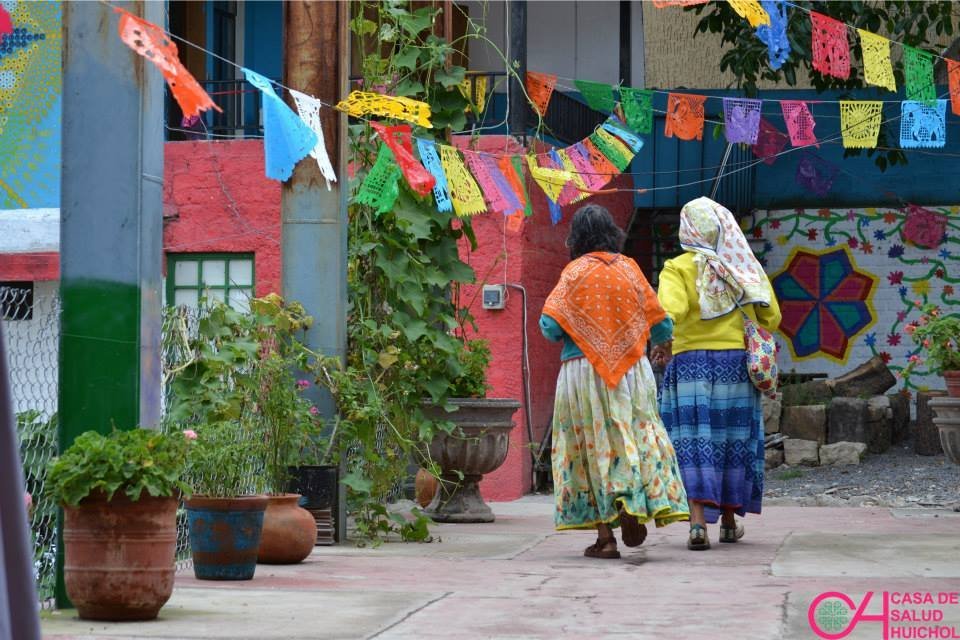
One of the most fascinating Wixaritari concepts is “Niérika”, which, according to their traditions, allows people to communicate with the gods and, at the same time, with their ancestors. Niérika is a system that allows the Wixaritari to come into contact with life itself, with their ancestors, with the history of their people and, in a complex and rich way, with all the wisdom gathered in the universe. Niérika is a threshold and a window: a kind of limit or border that both separates things and brings them into contact. It is like a subtle, almost imperceptible veil.
Hi’ikuri, or peyote, is also a fundamental part of Wixaritari culture. It is a small cactus that grows only in Wirikuta, one of the main sacred places of the Wixárika people, located in the state of San Luis Potosí. Peyote is one of the main instruments of niérika. Through it, priests speak directly with the gods in their dreams and when they sing. The gods instruct the priests through peyote and advise them when making decisions. Some consider peyote to be like a book that holds all knowledge.